Hydrology Solutions
The Challenge
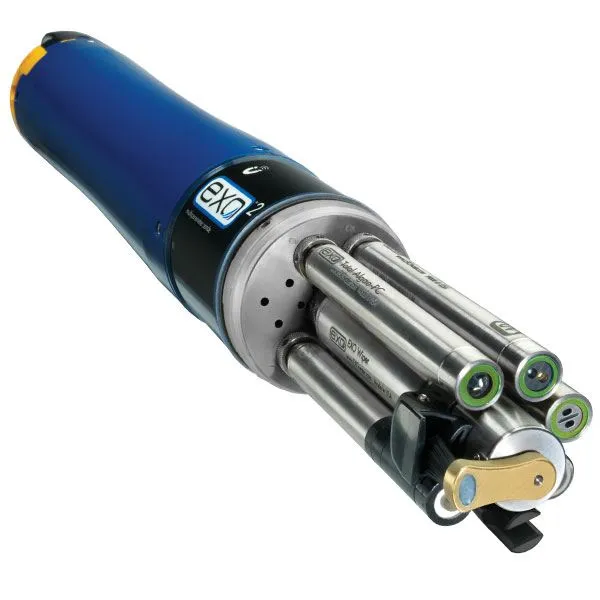
The field of hydrology has been a pioneer in introducing dataloggers into field science. The nature of the study of water is necessarily time-varying. Hydrologic instrumentation can be complex and produce unique challenges for the production, calibration, and management of the data and measurement quality.
Many aspects of hydrologic monitoring require derived datasets using calibrated and configured equipment. Currently, much of this is done locally on a very capable datalogger. However, this means all changes to the setup, a calibration, or a cable, require the logger to be recoded and the datasets to be cleaned to deal with the update.
Dendra’s Solution
Dendra calculates derived datasets on the fly on request. Because of this, all the equations can be performed server-side and can be adjusted remotely as needed. We use Assembly Script, which compiles to Web Assembly (WASM), an open web standard for scripting. Below are some examples.
Well water level
A common water depth sensor is the pressure transducer, which indicates the depth below the water surface the instrument is at using pressure. For a well, most people wish to know how far below the water surface is from the surface of the well-head - a slightly different question.
Our equation library has this, with inputs for the length of the pressure transducer cable, the distance between the well-head and ground, and conversion for pressure PSI to meters:
D = (Psi2Meter * WaterPressure) + WellHeadHeight - CableLength + Calibration
Discharge
Discharge is derived from a stream stage (water level from a known baseline) using a ratings curve. The ratings curve is usually a polynomial equation regressed from manual measurements at multiple stage levels. In natural systems, the bank and channel adjust over time, and ratings curves need to be updated.
In Dendra we use our equation library to define the ratings curve and can window the curves by time:
wy2008 - wy2016: Q = 57.397 * G4.4285
wy2017 - current: Q = 16.18 * G2.2924
Soil moisture
Water Content Reflectometers are used for soil moisture estimation. They derive soil moisture from dielectric permittivity using the Topp equation (Topp et al., 1980). Soil moisture is a notoriously difficult thing to measure since there can be very high levels of legitimate local variation coupled with high levels of variation due to the installation of the instrument. Some instruments require some localized soil calibration and can be dependent on temperature and electrical conductivity. Most instruments produce multiple raw and processed outputs and often include status information on the instrument itself. This is a complex mix of raw, derived, and status data and metadata.
Dendra assigns each output to a datastream and associates the appropriate metadata to each, including if the data is ready to use (Volumetric Water Content), raw (Period) or Status (ErrorCode). Soil calibrations can be calculated in, and a separate soil moisture can be derived if the on-instrument calculation is considered insufficient.
Acoustic Doppler Current Profiler (ADCP)
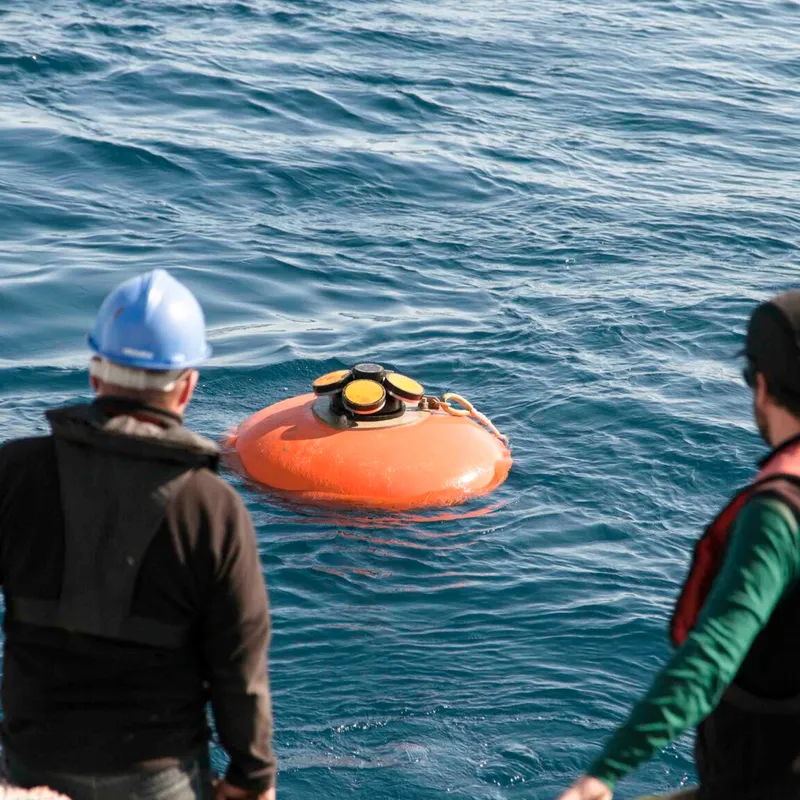
ADCP systems are used to characterize a water current velocity. A sonic ping is sent out and the returns get categorized into depths below the sensor due to how long it takes for them to return, with the changes to the return indicating how fast and which direction the water is moving. This produces a very large array of returns. Dendra is designed to accept arrays of data per timestamp, even if it is 100 one meter categories. This would be a single datastream, simplifying the searching for and management of the data. ADCP are often run from a boat or ship while moving. Dendra accepts location information per datapoint, so a lat,long, elevation can be input with each scan.
Summary
Dendra was built from the ground up to serve the hydrologic community as part of the critical zone. Many of the features built into Dendra came from scientists facing specific challenges in surface flows and transport in fractured rock. From our roots, we look forward to serving the hydrology community ongoing.
Reference
Topp, G.C., J.L. Davis & A.P. Annan. 1980. “Electromagnetic determination of soil water content: measurements in coaxial transmission lines,” Water Resources Research, v. 16, No. 3:574-582.
Learn More
Consortium of Universities for the Advancement of Hydrology Science, Inc.: https://cuahsi.org
Assembly Script: https://www.assemblyscript.org/